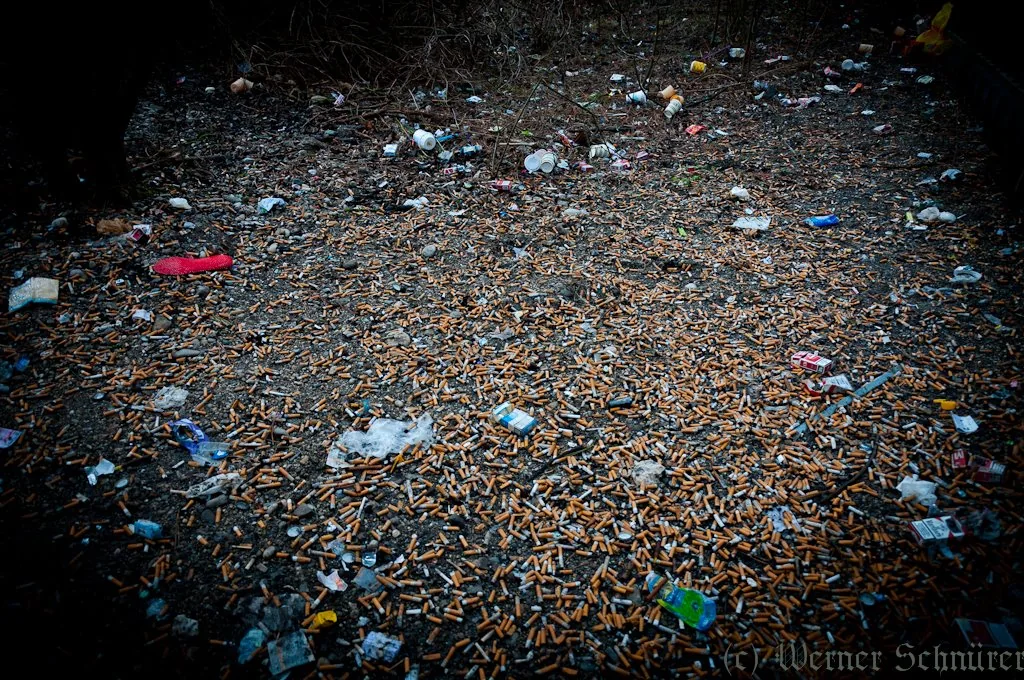
One cigarette butt. What could possibly happen?
The photograph was taken at München-Laim station. Just a few metres away: a no-smoking sign and litter bins. Yet there is not one cigarette butt here, but many.
This is not about accusing smokers. The more interesting question is different: how does a seemingly tiny leftover become a relevant problem?
Small enough to overlook
A single cigarette butt seems insignificant. In large numbers, the perspective changes. After smoking, nicotine and other substances remain in the butt; when discarded, they can enter the environment.
For children, small size is no protection
Germany’s Federal Institute for Risk Assessment (BfR) states that after eating more than half a cigarette or a cigarette butt, children can develop symptoms such as nausea, vomiting, agitation or palpitations. In such a case, a poison information centre should be contacted.
And then there is fire
A carelessly discarded cigarette can start a fire in dry conditions. The Bavarian state ministry explicitly lists discarded cigarette butts as a possible cause of forest fires.